
Unveiling the Lattice LCMXO2-1200UHC-4FTG256CANW: A Comprehensive Guide to its Architecture and Applications
The Lattice Semiconductor MachXO2 series represents a cornerstone of modern low-power, high-performance programmable logic. Among its diverse family, the LCMXO2-1200UHC-4FTG256CANW stands out as a particularly versatile solution, engineered to bridge the gap between traditional CPLDs and larger FPGAs. This article delves into the intricate architecture of this device and explores its wide-ranging applications across the electronics industry.
Architectural Deep Dive
At its core, the LCMXO2-1200UHC-4FTG256C is built on a low-power, 65nm embedded flash process. This foundational technology is key to its success, enabling both non-volatility and a significant reduction in static power consumption compared to SRAM-based alternatives. The device does not require an external boot PROM, simplifying board design and enhancing security.
The programmability is centered around a flexible Logic Density of 1280 LUTs (Look-Up Tables). These LUTs are the basic building blocks, configured to implement complex combinatorial and sequential logic functions. The logic fabric is organized into a sysMEM™ Embedded Block RAM (EBR) of 54 Kbits, providing efficient on-chip memory for data buffering and storage, and sysDSP blocks for implementing arithmetic functions.
A critical feature of this specific variant is its package: a 4FTG256C. This denotes a 256-ball, Fine-Pitch Thin Grid Array (FTGBA) package. This compact, lead-free package is designed for space-constrained applications and offers robust mechanical stability. The device's 4 speed grade ensures optimized performance for a broad range of operating conditions.
Furthermore, the architecture includes hardened, pre-engineered blocks that vastly improve system integration:
User Flash Memory (UFM): Up to 256 Kbits of dedicated flash storage are available for user data, ideal for storing system parameters, serial numbers, or small boot code.
I/O Capabilities: It features advanced I/O buffers supporting a wide range of standards (LVCMOS, LVTTL, LVDS, LVPECL, etc.), enabling seamless interfacing with processors, memory, and other peripherals.
On-Chip Oscillators: Integrated oscillators eliminate the need for external clock components, further reducing the bill of materials (BOM) and board space.
Diverse Application Landscape
The combination of non-volatility, low power, and a rich feature set makes the LCMXO2-1200UHC-4FTG256C an ideal choice for a multitude of applications.
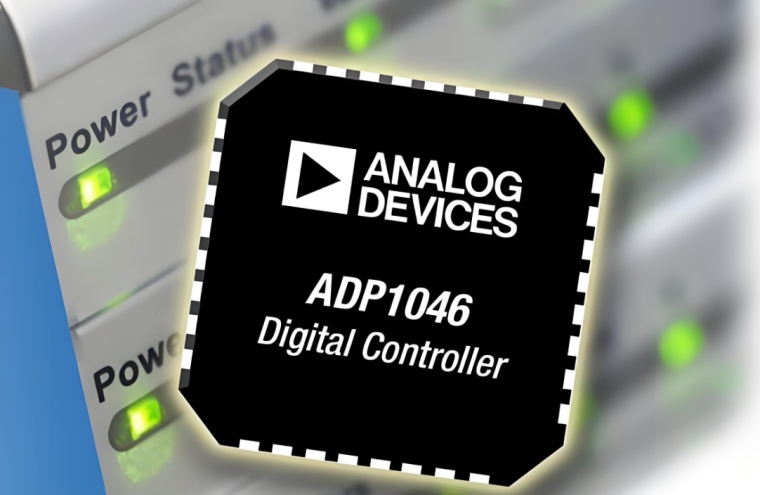
1. System Management: It is perfectly suited for power management and sequencing in complex systems like servers, telecommunications equipment, and industrial controllers. It can control power-up/power-down sequences, monitor voltage levels, and manage reset generation.
2. Hardware Security: The embedded flash memory can be used to store encryption keys and security bits, protecting intellectual property from reverse engineering and unauthorized access. Its non-volatile nature ensures the security configuration is retained even when power is off.
3. Sensor Bridging and Interface Aggregation: In IoT and embedded systems, it excels at interfacing multiple sensors with different protocols (I²C, SPI, Sensor Bus) to a host processor, acting as a programmable bridge and data aggregator.
4. Consumer Electronics: Its low power consumption makes it ideal for portable and battery-powered devices, such as smartphones and tablets, where it manages interface translation, GPIO expansion, and system control functions.
5. Automotive and Industrial: In these harsh environments, the device's robustness and reliability are critical. It is used for motor control, board management, and implementing custom glue logic that must remain stable over a long product lifecycle.
ICGOOODFIND
The Lattice LCMXO2-1200UHC-4FTG256CANW is a quintessential example of a modern, ultra-low-power programmable logic device. Its intelligent blend of non-volatile flash technology, a balanced ratio of logic, memory, and DSP, and advanced packaging options provides engineers with a powerful, secure, and cost-effective platform. It effectively consolidates multiple discrete components into a single chip, addressing the relentless market demands for reduced size, lower power, and increased system reliability across virtually every sector of electronics.
Keywords:
Non-Volatile FPGA
Low-Power Architecture
Programmable Logic Device
System Management
Interface Bridging

