
Lattice LFE3-150EA-6FN672I: A Comprehensive Technical Overview of the FPGA's Architecture and Applications
The Lattice LFE3-150EA-6FN672I is a prominent member of the LatticeECP3™ FPGA family, engineered to deliver a unique blend of high performance, low power consumption, and cost-effectiveness. This FPGA is specifically designed to address the complex needs of a wide array of applications, from high-speed communications to industrial automation.
Architectural Deep Dive
At its core, the LFE3-150EA is built on a high-performance, low-power FPGA fabric. Its architecture is a sophisticated integration of several key components:
Programmable Logic Elements: The device features approximately 150K Look-Up Tables (LUTs), providing a significant volume of general-purpose logic for implementing complex digital circuits and processing algorithms.
Embedded Memory: A substantial amount of embedded memory, organized in sysMEM™ Embedded Block RAM (EBR), is available. This on-chip memory is crucial for buffering data, storing coefficients, and implementing FIFOs, which enhances data throughput and reduces latency by minimizing off-chip memory accesses.
DSP Slices: Integrated sysDSP® slices provide dedicated hardware for high-speed arithmetic operations like multiplication, addition, and accumulation. This is indispensable for performing digital signal processing (DSP) tasks—such as FFTs, FIR filters, and encryption—efficiently and without burdening the main logic fabric.
High-Speed SerDes: A defining feature of the ECP3 family is its robust SerDes (Serializer/Deserializer) technology. The LFE3-150EA supports multiple high-speed serial channels capable of data rates up to several gigabits per second (Gbps). These channels are compliant with popular protocols like PCI Express, Ethernet (1GbE, SGMII), and CPRI, making it an ideal solution for bridging and interface applications.
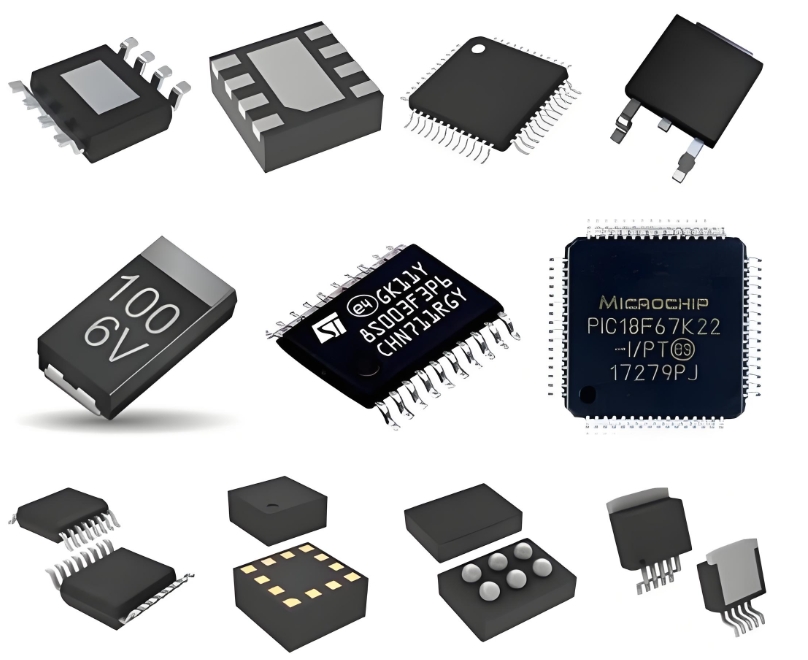
Package and I/O: Housed in a 6FN672I package (Fine-pitch BGA with 672 balls), this FPGA offers a vast number of user I/Os. These I/Os support a wide range of voltage standards (LVCMOS, LVDS, etc.), providing the flexibility to interface with various other components in a system.
Key Applications
The robust feature set of the LFE3-150EA-6FN672I makes it suitable for diverse markets:
Communications Infrastructure: It is widely used in wireless baseband units, network routers, and switches for protocol bridging, signal processing, and traffic management, leveraging its high-speed SerDes and DSP capabilities.
Industrial and Automotive Systems: In this sector, the FPGA provides reliability for motor control, machine vision, sensor fusion, and industrial networking. Its deterministic operation and ability to interface with numerous sensors and actuators are highly valued.
Video and Imaging: The device excels in video bridging, format conversion, and image processing applications. It can process high-resolution video streams, handle different interface standards (HDMI, SDI), and perform real-time enhancements.
Military and Aerospace: While requiring appropriate screening, its low power consumption and processing prowess are beneficial for ruggedized communications, radar, and avionics systems where size, weight, and power (SWaP) are critical constraints.
ICGOOODFIND
The Lattice LFE3-150EA-6FN672I FPGA stands out as a highly versatile and efficient solution for designers. Its balanced architecture, combining substantial logic density, powerful embedded SerDes, and dedicated DSP blocks, empowers the creation of innovative products across communications, industrial, and video markets. Its focus on low power consumption further ensures it meets the stringent requirements of modern, power-sensitive applications, solidifying its position as a critical component in advanced electronic systems.
Keywords: LatticeECP3, High-Speed SerDes, Low-Power FPGA, Embedded DSP, Programmable Logic

