
Lattice LFE5U-12F-6BG256C: An Overview of ECP5 FPGA Features and Applications
The Lattice LFE5U-12F-6BG256C is a specific member of the Lattice ECP5™ FPGA family, renowned for its high performance-per-watt in a small form factor. This particular device, packaged in a 256-ball caBGA (6x6mm), exemplifies the modern push towards enabling complex logic designs in power-constrained and space-sensitive applications. The ECP5 series leverages Lattice Semiconductor's low-power FPGA expertise, making it a compelling choice for a wide array of markets, including communications, industrial, automotive, and consumer electronics.
At the core of the LFE5U-12F lies an efficient FPGA fabric built on a 65nm process node. The "-12F" denotes it as a mid-range device within the family, featuring approximately 12K Look-Up Tables (LUTs). This provides a substantial amount of programmable logic for implementing custom digital circuits, from simple state machines to complex processing pipelines. The architecture is enhanced with embedded memory blocks (EBRs) for distributed data storage and dedicated DSP blocks for efficiently implementing high-performance multipliers, accumulators, and other math-intensive functions.
A standout feature of the ECP5 platform is its advanced SERDES (Serializer/Deserializer) capability. The LFE5U devices are equipped with multiple multi-protocol SERDES lanes capable of supporting high-speed data transmission standards. These include PCI Express® (up to Gen2), Gigabit Ethernet (SGMII), and other common protocols like CPRI and JESD204B. This makes the FPGA an ideal solution for bridging data interfaces, implementing packet processing, or acting as a connectivity hub in systems.
Complementing the high-speed I/O are numerous other interface options. The device supports common LVDS (Low-Voltage Differential Signaling) for robust noise-resistant data transfer, alongside single-ended I/O standards like LVCMOS. This flexibility allows designers to connect the FPGA directly to a vast assortment of sensors, memory devices, displays, and processors.
For development, Lattice provides the Lattice Diamond® and Lattice Radiant® design suites. These environments offer a complete flow for design entry, synthesis, place-and-route, and bitstream generation. Furthermore, the ECP5 is fully supported by the open-source Yosys and nextpnr toolchains, a significant advantage for developers seeking a vendor-agnostic or cost-free development path.
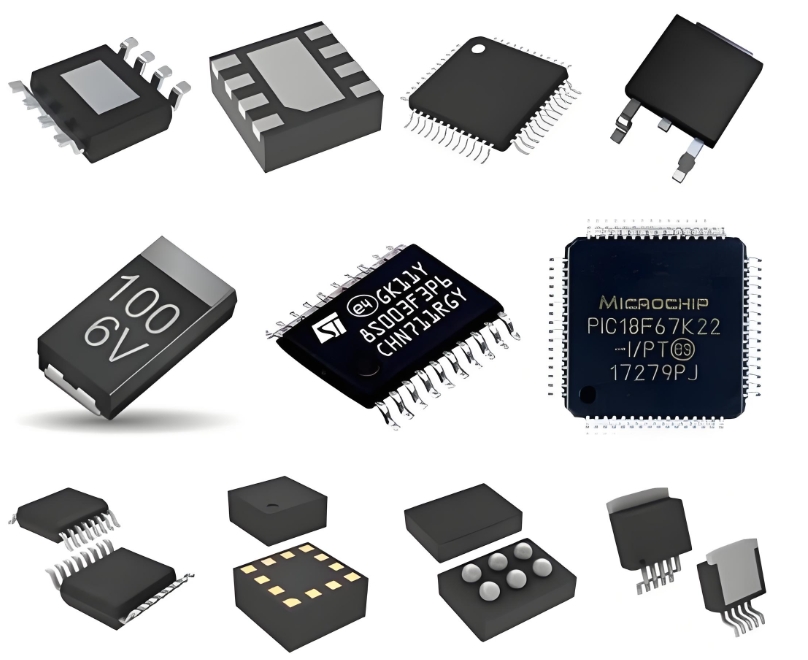
The applications for the LFE5U-12F-6BG256C are diverse. It is perfectly suited for:
Communication & Networking: Used in 5G infrastructure for small cell basebands, in routers and switches for protocol bridging, and in network interface cards.
Industrial Automation: Acting as a real-time controller, motor drive controller, or a gateway for sensor fusion in IoT endpoints and factory systems.
Automotive: Employed in advanced driver-assistance systems (ADAS) for sensor data aggregation and pre-processing from cameras, LiDAR, and radar.
Consumer Electronics: Enhancing video processing, image signal processing (ISP), and system control in applications like drones and augmented reality devices.
System Management: Often serving as a hardware management controller, handling power sequencing, voltage monitoring, and fan control in server and computing platforms.
ICGOODFIND: The Lattice LFE5U-12F-6BG256C stands out as a highly versatile and power-efficient FPGA. Its balanced mix of logic density, high-speed SERDES, and a small package makes it a superior solution for designers tackling the challenges of next-generation embedded systems that require robust connectivity and processing in a minimal power and physical footprint.
Keywords: ECP5 FPGA, High-Speed SERDES, Low-Power Design, Embedded Systems, Protocol Bridging

